


Table of Contents
A modern barn door is a wall-mounted sliding interior door with clean lines, updated materials, and hardware such as frosted glass, mirror panels, matte black rollers, or concealed tracks. It saves swing space, but it needs clear wall space, secure mounting, and realistic privacy expectations.
This guide compares modern barn doors by style, room fit, sizing, hardware, cost, and installation so you can buy once and avoid the usual measuring and mounting mistakes.
What Is a Modern Barn Door?

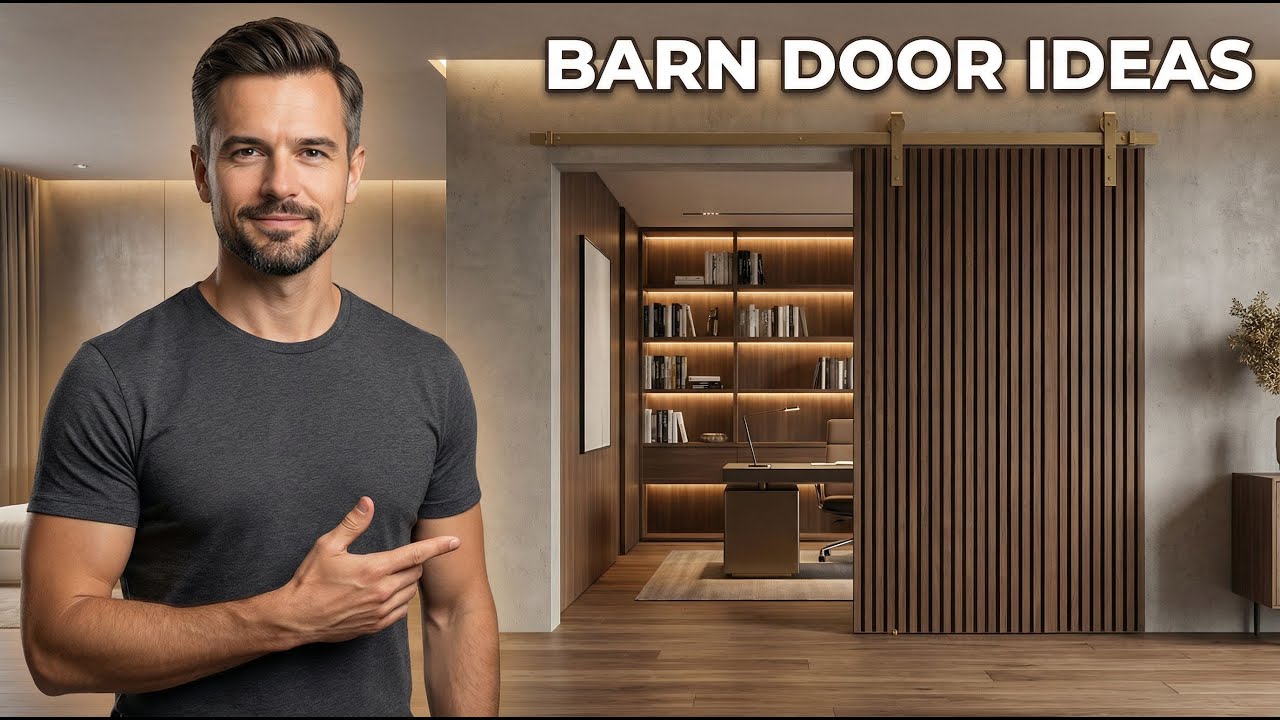
A modern barn door uses a sliding track like a traditional barn door, but the design feels cleaner and more architectural. Instead of rough planks and heavy X-braces, you’ll see flush slabs, frosted glass, mirror panels, black frames, slim pulls, and soft-close hardware.
Modern vs Rustic
Modern styles usually use smooth panels, straight edges, neutral colors, and low-profile hardware. Rustic styles lean on distressed wood, visible knots, Z-braces, X-braces, and oversized strap rollers, which can look too farmhouse-heavy in a minimal room.
How Sliding Barn Doors Work
A modern sliding barn door hangs from rollers that ride on a track rail mounted above the opening. The floor guide keeps the bottom from swinging, while stops and anti-jump blocks keep the door from sliding too far or lifting off the rail.
Common Sizes
Stock interior door sizes often follow common residential widths, and many retailers list modern barn door slabs around 30, 32, 36, and 42 inches wide. The Home Depot interior doors category reflects how common these standard sizes are in off-the-shelf projects.
| Opening or Door Detail | Common Measurement | Practical Note |
|---|---|---|
| Door widths | 30, 32, 36, 42 inches | Pick wider than the opening for overlap |
| Door heights | 80, 84, 96 inches | Match trim height and track clearance |
| Door thickness | 1-3/8 to 1-3/4 inches | Must match roller hardware |
| Track length | About 2× door width | 36-inch door usually needs a 72-inch track |
Typical Use Cases
Best-fit rooms include closets, pantries, laundry rooms, home offices, ensuite entries, and room dividers. For wide openings that separate zones rather than fully seal them, compare barn doors with room divider doors before choosing hardware.
Styles and Materials to Compare
The best modern barn doors match the room’s light, privacy, durability, and cleaning needs. A bathroom door needs a different surface and privacy plan than a pantry door that mostly hides shelves.
Flush Panel Doors
Flush panel doors work well in minimalist interiors because the face stays flat and quiet. They show fingerprints on dark finishes, so matte black looks sharp but needs more wiping than white, oak, or walnut-look finishes.
Frosted Glass Doors
Frosted glass lets light pass while blurring shapes, which helps bathrooms, offices, and laundry rooms feel less closed off. Choose tempered glass for safety because it’s made to break into smaller pieces rather than sharp shards, as described in the CPSC safety glazing standard.
Mirror Barn Doors
A mirror barn door suits bedrooms, closets, and dressing areas because it adds function without using extra wall space. The trade-off is weight; mirror panels need hardware rated above the door weight and a floor guide that doesn’t scrape the reflective face.
Chevron and Geometric
Chevron patterns, wave panels, and geometric faces make a plain opening feel intentional. Use them on focal walls, but avoid strong patterns in rooms you redesign often because bold faces can age faster than a smooth slab.
Black Frame Doors
Black frame doors pair especially well with frosted glass, clear glass, white walls, and matte black hardware. They create crisp contrast, but the frame lines must sit level; a small tilt becomes obvious against tile, casing, or horizontal grout lines.
MDF and Engineered Wood
MDF doors offer smooth painted surfaces at accessible prices, while engineered cores can stay flatter than some solid wood doors. Beginners often over-tighten screws in MDF, so pre-drill clean pilot holes and avoid repeatedly removing roller bolts from the same spot.
Solid Wood Doors
Solid wood feels heavier, quieter, and more substantial when you slide it; you can feel the slow pull in the rollers. It costs more, may move with humidity, and needs stronger lag bolts, especially for oversized oak, walnut, maple, alder, or pine slabs.
PVC and Metal Frames
PVC finishes resist splashes better than raw MDF, which helps in bathrooms and laundry rooms. Metal or carbon steel frames add strength and modern contrast, but they require precise alignment because a heavy frame will expose any out-of-level track fast.
- Choose frosted or solid panels for visual privacy.
- Choose mirror panels for closets and dressing areas.
- Choose flush slabs for the cleanest minimalist look.
- Choose black frames when contrast matters.
- Choose PVC surfaces where splashes are common.
Best Rooms and Privacy Fit
A modern barn door works best where saving swing space matters more than creating a tight acoustic seal. It’s strongest for closets, pantries, laundry rooms, and offices, and weaker for bathrooms or bedrooms that need full sound control.
Bedroom Barn Doors
Bedroom barn doors are useful for ensuite entries, closet openings, and sitting areas. Use solid-core, frosted glass, or mirror styles, and don’t place the handle where it will hit a bedside table when the door opens.
Bathroom Barn Doors
Bathroom barn doors can work, but they don’t seal like hinged doors. Use 2 to 4 inches of overlap, frosted glass or a solid panel, a privacy lock, and side trim or brush seals to reduce visible gaps, steam leaks, and odor movement.
Closet Barn Doors
Closet barn doors are one of the safest choices because sound privacy rarely matters. For wide closets, compare a single oversized slab with sliding bypass closet doors, since bypass panels need less side wall space.
Laundry Room Doors
Laundry openings often sit in narrow hallways, which makes sliding doors practical. Leave room for ventilation if appliances create heat and humidity, and avoid blocking access panels or shutoff valves behind the open door.
Pantry Barn Doors
Pantry barn doors save floor clearance in busy kitchens and can hide shelves without crowding the aisle. Soft-close hardware helps here because pantry doors get opened with full hands, and the dull thud of a slamming slab gets old fast.
Home Office Doors
Home office doors benefit from frosted glass because it keeps daylight moving while hiding clutter and screen glare. For calls, use a solid-core door or consider a pocket-style solution such as glass pocket doors if sound matters more than wall-mounted style.
Visual Privacy
Visual privacy comes from overlap, material, and gap control. Solid doors and mirror doors hide the most, frosted glass blurs detail, and clear glass only works where privacy isn’t the goal.
Sound Privacy
Sound privacy is the main weakness of barn doors because air gaps carry voices. A solid-core slab helps, but the side and floor gaps still limit performance compared with a hinged door pressed into a jamb.
Sizing and Wall Clearance
A modern sliding barn door should usually be 2 to 4 inches wider than the opening, and its track should be about twice the door width. These two measurements prevent the most common buying mistakes.
Opening Width Overlap
Door overlap reduces light leaks and improves privacy. For a 32-inch opening, choose about 34 to 36 inches; for a 36-inch opening, choose about 38 to 40 inches when wall space allows.
Door Height Gap
Bottom clearance usually lands around 3/8 inch to 1/2 inch, depending on the hardware and flooring. Carpet, uneven tile, and thick thresholds need extra attention because a door that barely clears bare subfloor may drag after finish flooring goes in.
Track Length Formula
Track length should be about door width × 2. A 30-inch door needs roughly 60 inches of track, a 36-inch door needs roughly 72 inches, and a 42-inch door needs roughly 84 inches.
Wall Space Check
Wall clearance beside the opening must be at least the width of the door so it can fully open. Check outlets, switches, thermostats, return vents, art, furniture, and nearby window trim before buying.
Trim and Baseboards
Trim depth can push the door away from the wall or make rollers rub against casing. Track spacers and a header board can solve this, but deep baseboards may still need a wall-mounted floor guide instead of a floor-drilled guide.
Studs and Header Board
Stud support matters more than the door style. If the track holes don’t land on studs, install a 1×4, 1×6, or 1×8 header board; for unusual openings, a custom size door can prevent awkward overlap or short tracks.
Modern Barn Door Hardware

Modern barn door hardware includes the track rail, rollers, spacers, stops, anti-jump blocks, floor guide, handles, and optional soft-close or lock hardware. The kit must match the door’s width, thickness, weight, and wall structure.
Track Rails
Track rails carry the full moving load, so they must attach to studs or a header with proper lag bolts. Common lengths include 5 feet, 5.5 feet, 6 feet, 6.6 feet, and 8 feet.
Roller Styles
Roller styles shape the look of the door as much as the slab does. Low-profile rollers, top-mount rollers, and concealed rollers read modern, while large strap rollers feel more rustic or industrial.
Soft-Close Hardware
Soft-close hardware slows the slab near the open or closed stop, which protects fingers, walls, and glass panels. Check minimum door width because some dampers need enough travel distance to catch and pull the door smoothly.
Floor Guides
Floor guides stop the bottom edge from swaying away from the wall. Skipping this part is a beginner mistake; the door may feel fine on day one, then wobble, scrape, or knock the wall after repeated use.
Anti-Jump Blocks
Anti-jump blocks help keep rollers from lifting off the rail. They’re small, easy to forget, and worth installing every time, especially with glass, mirror, solid wood, or homes where kids may pull on the door.
Handles and Pulls
Door pulls need clearance on both sides. The wall-facing side often needs a recessed pull; a proud handle can hit the casing and stop the door from opening all the way.
Privacy Locks
Privacy locks help bathrooms, bedrooms, and offices feel more secure, but they don’t remove side gaps. Hook locks, teardrop latches, and privacy bolts all need careful placement so they catch without pulling the door out of alignment.
Weight and Thickness Ratings
Hardware ratings commonly range from about 150 to 400 pounds, depending on the kit. Door thickness often falls around 1-3/8 to 1-3/4 inches, and mismatch can make roller bolts too short or leave the hanger loose.
Cost, Value and Alternatives
A modern barn door project commonly costs about $250 to $1,200 for standard DIY or mid-range installations, while premium custom work can exceed $4,000. The real total includes the slab, hardware, wall prep, installation labor, and finishing work.
Installed pricing changes with door weight, wall blocking, trim work, and glass handling. Labor guides such as Angi barn door installation cost show why the installation line can vary as much as the door itself.
Door Slab Cost
Door slabs often run about $150 to $300 for budget models, $300 to $800 for mid-range doors, and $800 to $4,000+ for premium or custom modern barn doors. Glass, mirror, solid hardwood, oversized dimensions, and specialty finishes raise the total fast.
Hardware Cost
Hardware kits may cost about $40 to $100 for budget exposed rails, $100 to $250 for mid-range kits, and $250 to $600+ for concealed, soft-close, bypass, or heavy-duty systems. Cheap rollers often feel gritty under load, especially on heavy slabs.
Installation Cost
Professional installation often lands around $200 to $600+, with higher quotes for header boards, trim changes, heavy glass, double doors, bypass systems, or wall repair. DIY saves labor, but a crooked track can waste the entire door budget.
Total Project Cost
| Project Type | Typical Total | What Usually Drives Cost |
|---|---|---|
| Budget DIY | $250 to $500 | Basic slab, exposed rail, simple opening |
| Mid-range project | $500 to $1,200 | Better slab, soft-close kit, minor wall prep |
| Premium installed | $1,200 to $4,000+ | Custom sizing, glass, mirror, solid wood, specialty hardware |
Barn Door vs Hinged Door
Hinged doors seal better for sound, odor, and privacy, while barn doors save swing space and add visual impact. Pick a hinged door for a primary bathroom where privacy matters most; pick a barn door for closets, pantries, and tight transitions.
Barn Door vs Pocket Door
Pocket doors slide inside the wall, so they save wall surface space and look cleaner when open. A barn door is easier to retrofit because the wall cavity stays closed, but compare it with a pocket door if the wall beside the opening is blocked.
Barn Door vs Bypass Door
Bypass doors let panels slide in front of each other, which helps wide closets with limited side wall clearance. A single modern sliding barn door feels cleaner and needs simpler hardware, but it requires enough clear wall for the full slab.
Barn Door vs French Doors
French doors give symmetry and better sealing, while barn doors save floor space and suit narrow rooms. If you like glass but need a cleaner swing-free layout, compare barn options with French pocket doors.
Recommended Modern Barn Doors
Use these product groups after measuring your opening, wall space, track length, and privacy needs. Match the door to the room first, then check hardware weight, thickness, soft-close fit, and lock compatibility.
Bathroom Privacy and Light
These frosted options suit bathrooms, laundry rooms, offices, and ensuite openings where privacy and daylight both matter.

Frosted Glass Barn Door
- Frosted 5-lite glass design adds style and privacy
- includes 6.6-foot track hardware kit and handle
- sturdy MDF build for dependable everyday use
- pre-drilled parts help speed up installation
- mortise and tenon structure adds extra strength
 Buy on Amazon

Frosted Panel Barn Door
- Five-panel frosted glass design balances light and privacy
- 6.6-foot hardware kit and handle are included
- water-proof surface helps stand up to moisture
- pre-drilled holes support easier assembly
- sturdy construction suits busy interior spaces
Buy on Amazon

Concealed Frosted Door
- Soft close system helps prevent slamming and noise
- frosted tempered glass offers privacy with a bright open feel
- concealed hardware creates a streamlined modern look
- waterproof design works well in humid rooms
- fits a range of opening sizes for flexible use
Buy on Amazon
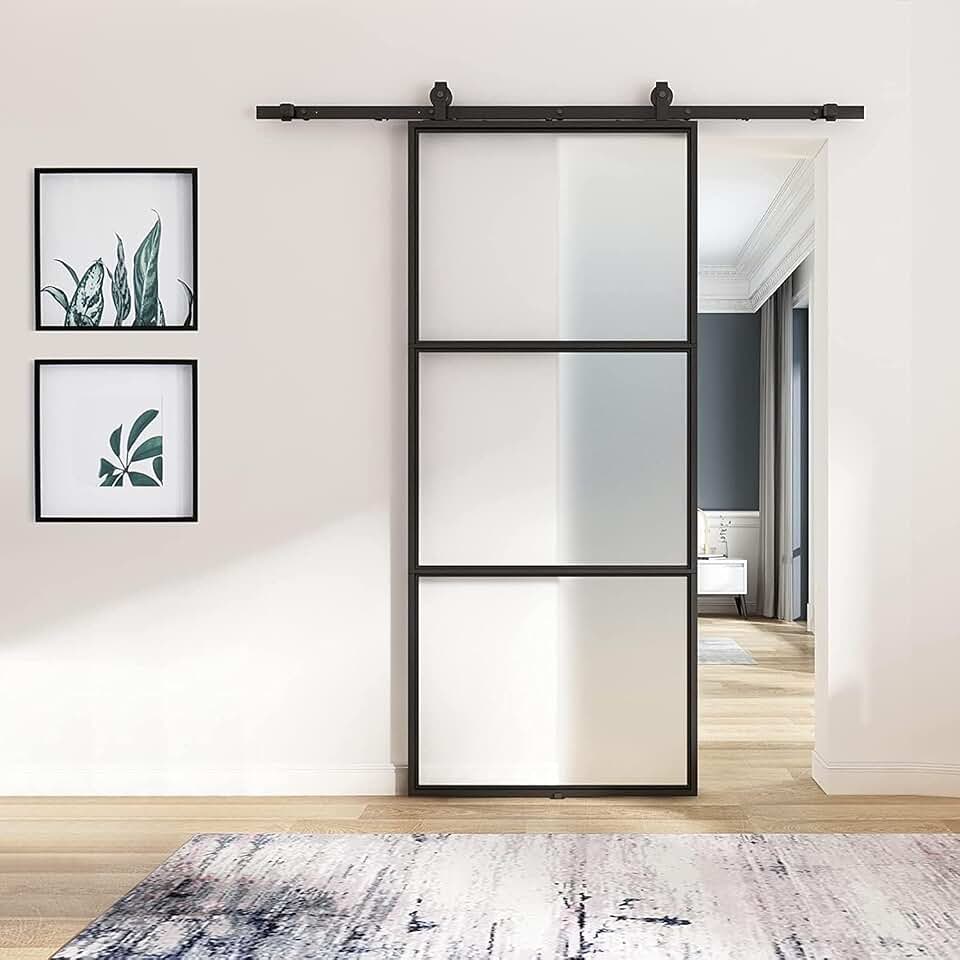
Soft Close Frosted Door
- Frosted glass provides privacy without blocking natural light
- soft close mechanism reduces noise and wear
- top mounted hardware delivers a clean modern profile
- black carbon steel frame adds strength and contrast
- assembly friendly design helps simplify installation
Buy on Amazon
Bathroom buyers should still plan overlap, a privacy lock, and a seal strategy. Frosted glass hides detail, but it won’t block sound like a gasketed hinged door.
Closets and Bedrooms
These closet-friendly doors work well where mirror function, space-saving movement, and easy daily access matter.
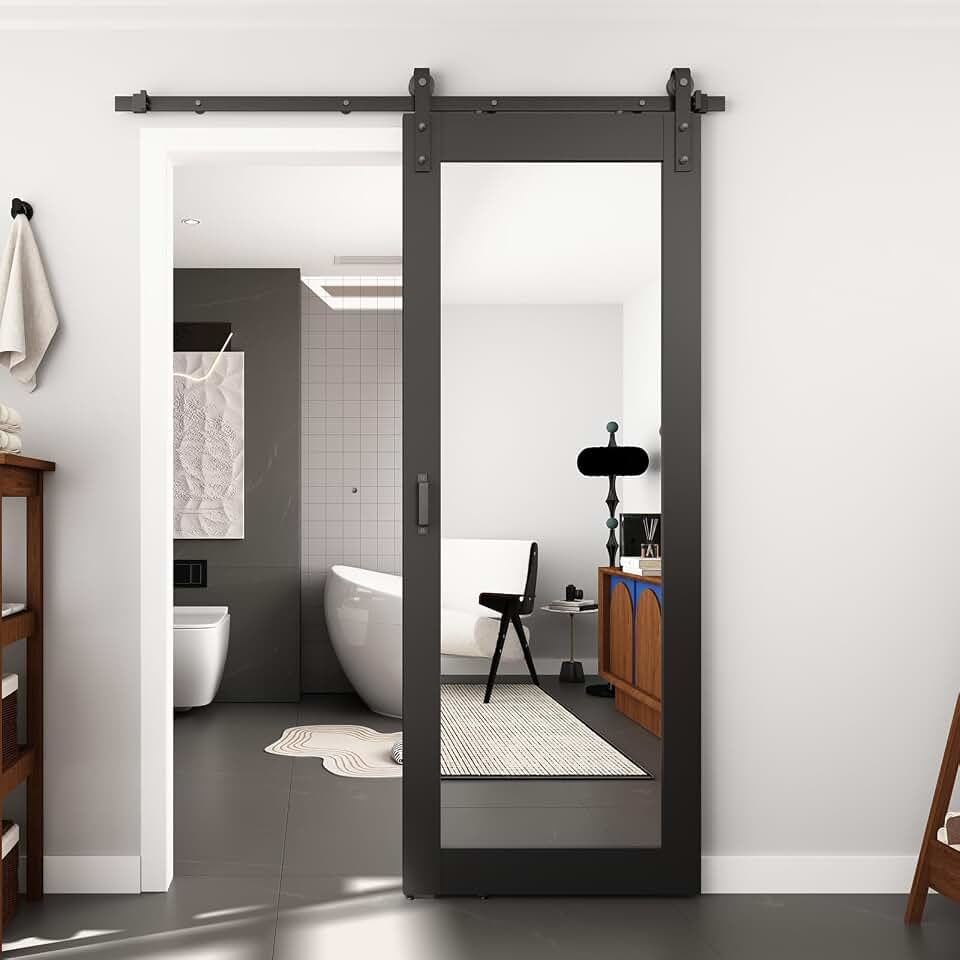
Mirror Barn Door
- Full length mirror adds light and everyday convenience
- included 5.5-foot hardware kit simplifies the project
- waterproof PVC surface helps resist moisture and wear
- no assembly required for faster installation
- solid wood construction adds stable support
Buy on Amazon

Modern Mirror Barn Door
- Mirrored panel brightens rooms and expands visual space
- black MDF frame delivers a sleek modern style
- hardware kit and handle are included for convenience
- sliding design saves floor space
- ideal for adding function to interior rooms
Buy on Amazon
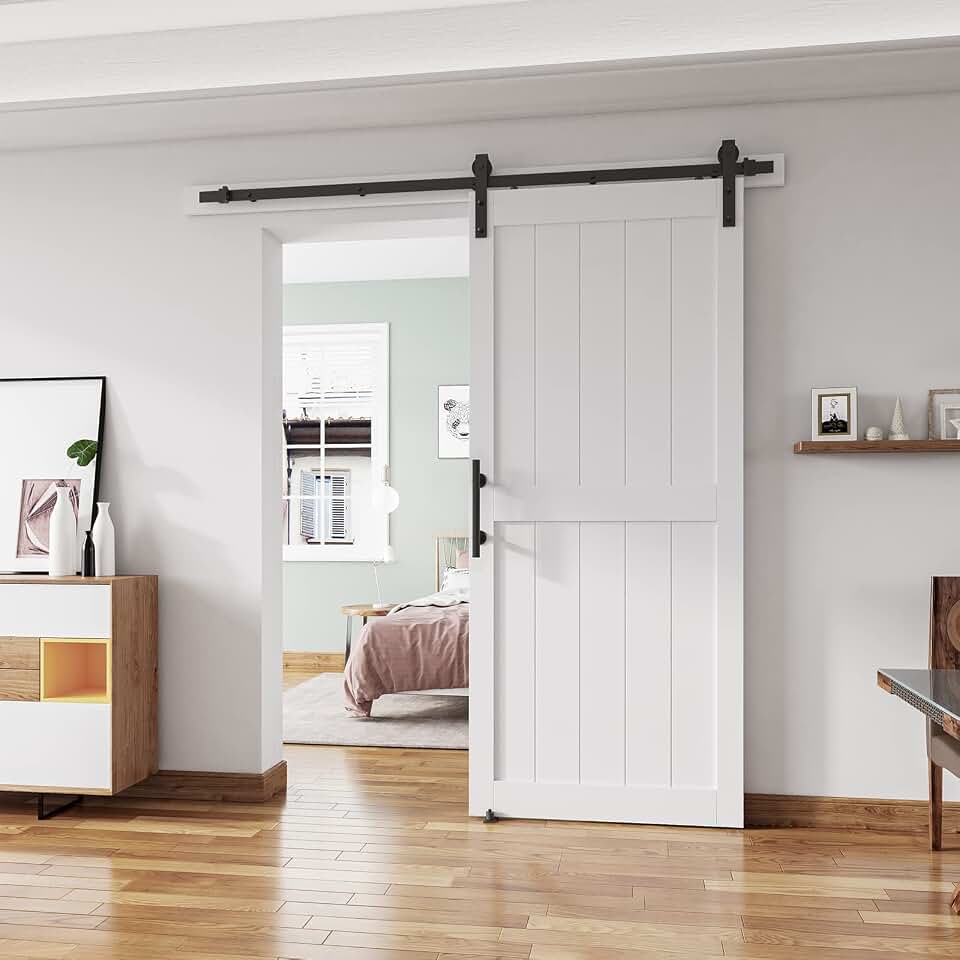
White H-Frame Barn Door
- Clean white H-frame style suits modern interiors
- 6.6-foot hardware kit is included for easier setup
- waterproof PVC surface helps resist moisture and scuffs
- pre-drilled holes support quicker assembly
- fits common openings for flexible home updates
Buy on Amazon
Mirror doors need extra care during hanging because the panel weight and reflective surface expose mistakes. Wear gloves, keep the slab upright, and check that the floor guide won’t scratch the finish.
Minimalist Modern Interiors
These minimalist picks suit spaces where exposed hardware would feel too rustic or visually busy.

Hidden Track Barn Door
- Concealed sliding design gives a clean modern look
- soft close hardware helps reduce noise and impact
- pre-assembled panel saves time during setup
- double sided pulls offer easy use from both sides
- white primed surface is ready for your finish
Buy on Amazon
Concealed Frosted Door
- Soft close system helps prevent slamming and noise
- frosted tempered glass offers privacy with a bright open feel
- concealed hardware creates a streamlined modern look
- waterproof design works well in humid rooms
- fits a range of opening sizes for flexible use
Buy on Amazon
Concealed tracks look clean, but they can be less forgiving during adjustment. Check service access before installing one in a tight hallway or against a finished ceiling detail.
Statement Design Doors
These statement doors work best where the door becomes part of the room design rather than fading into the wall.
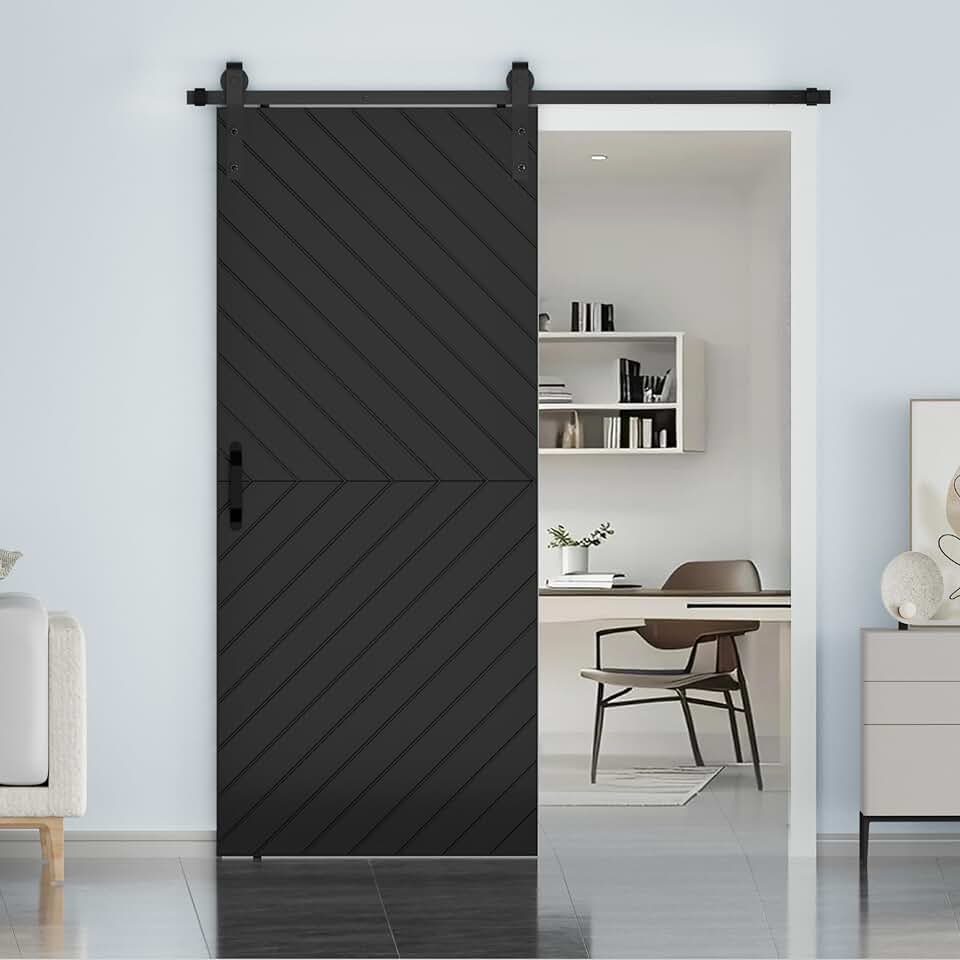
Chevron Barn Door
- Chevron pattern creates a bold modern statement
- hollow-core build keeps the door lighter for handling
- waterproof PVC covering helps protect the surface
- 6-foot hardware kit is included for convenience
- prepped for easier installation and daily use
Buy on Amazon

Wave Panel Barn Door
- Wave shaped panels add a distinctive decorative look
- included hardware kit makes setup more convenient
- waterproof finish helps protect against everyday moisture
- pre-drilled holes support faster assembly
- great fit for bedrooms, bathrooms, and closets
Buy on Amazon
Patterned doors should match the scale of the wall. A large chevron can look great in a hallway, but it may feel loud on a small bathroom opening next to busy tile.
Installation and Buying Checklist
Modern barn door installation is manageable for careful DIY work, but the track must be level, supported, and matched to the door weight. The hardest part isn’t hanging the slab; it’s planning around studs, trim, flooring, and real wall clearance.
Required Tools
Basic tools include a tape measure, level, stud finder, drill, drill bits, socket wrench, pencil, step ladder, screwdriver, safety glasses, lag bolts, and a header board if the studs don’t line up with the track holes.
Installation Steps
- Measure the opening width and height.
- Choose a door 2 to 4 inches wider than the opening.
- Confirm clear wall space equal to the door width.
- Locate studs and mark track height.
- Install a header board if needed.
- Mount the track level with proper spacers.
- Attach rollers to the door.
- Hang the door on the rail with a helper.
- Install anti-jump blocks, stops, and the floor guide.
- Test movement, then adjust soft-close hardware and handles.
Hardware Buying Checklist
Before buying, confirm door width, door height, thickness, weight, track length, stud position, header need, trim depth, guide type, handle clearance, soft-close fit, and lock compatibility. For heavy mirror or glass doors, choose hardware rated above the door’s actual weight.
Bathroom Checklist
Bathroom projects need extra overlap, a privacy lock, frosted glass or a solid panel, and a plan for side gaps. Brush seals and side casing can help, but they won’t make a barn door seal like a hinged bathroom door.
Glass and Mirror Checklist
Glass panels need two-person handling, tempered construction, padded staging, and compatible roller brackets. You can hear a faint rattle when a loose glass door rolls; stop and tighten before that vibration turns into chipped edges or cracked mounting points.
Common Installation Mistakes
Common mistakes include mounting into drywall only, buying a short track, forgetting overlap, ignoring baseboards, skipping the floor guide, setting soft-close dampers too far from the stop, and failing to check handle clearance before drilling.
Final Pre-Purchase Checks
Final checks should happen before you click buy: measure twice, compare the track length to the door width, verify the hardware rating, confirm return clearance, and check that the chosen style suits the room’s privacy needs.
Practical Notes From Real-World Use
Real use exposes small errors fast: a rail that’s off by even a little makes the door drift open, a shallow floor guide lets the slab knock the wall, and a cheap roller can feel sandy under your hand after a few weeks. The best workaround is to dry-fit the door, move it through the full travel path, listen for rubbing, then tighten the final bolts only after the guide, stops, and soft-close catches line up cleanly.
FAQs
Are Modern Barn Doors Still In Style?
Yes, modern barn doors are still in style. They remain popular because they save space and add a clean, decorative look to many homes. For the best result, choose simple hardware and a finish that matches your room.
Are Barn Doors Good For Bathrooms?
Yes, barn doors can work well for bathrooms. They are a good space-saving option, especially in tight hallways or small rooms. Just keep in mind that they do not seal as tightly as a hinged door, so privacy and sound control may be lower.
How Much Bigger Should A Barn Door Be Than The Opening?
A barn door should usually be at least 1 to 2 inches wider than the opening on each side. This helps cover the doorway properly and reduces gaps. If you want more privacy, many people choose a door that overlaps the opening a little more.
How Long Should A Barn Door Track Be?
A barn door track should be long enough for the door to fully slide open past the opening. A common rule is to make the track at least twice the width of the door. This gives the door enough room to move completely out of the way.
Do Barn Doors Block Sound?
No, barn doors do not block sound very well. They hang slightly away from the wall, so gaps are common around the edges. If sound control is important, a traditional hinged door with proper seals is usually a better choice.
Disclosure: LuxyDoor is reader-supported. When you buy through links on our site, we may earn an affiliate commission at no extra cost to you. As an Amazon Associate we earn from qualifying purchases.

Abdelbarie Elkhaddar
Glamorwood Ltd.
A door expert and home improvement writer with over 12 years of experience. I help homeowners and contractors choose smart, stylish, and secure doors.
Bifold Barn Door Buying Guide: Sizes, Clearance, Hardware, and Tips
A bifold barn door can add barn-style character while saving space in closets, pantries, laundry rooms, bathrooms, and tight hallways. This guide explains how they work, how to measure correctly, what hardware you need, and what to check before buying.Room Divider Doors: 5 Smart Designs to Maximize Space
Quick guide to five room divider doors that reclaim space and add privacy. Learn pros, simple install tips, and best styles for small rooms.



Leave a Reply