


Yes, most screen doors for French doors work with retractable, magnetic, hinged, pleated, or sliding systems. The right choice depends on door swing, center construction, mounting space, finished opening measurements, pets, traffic, and budget.
Table of Contents
Can French Doors Have Screen Doors?
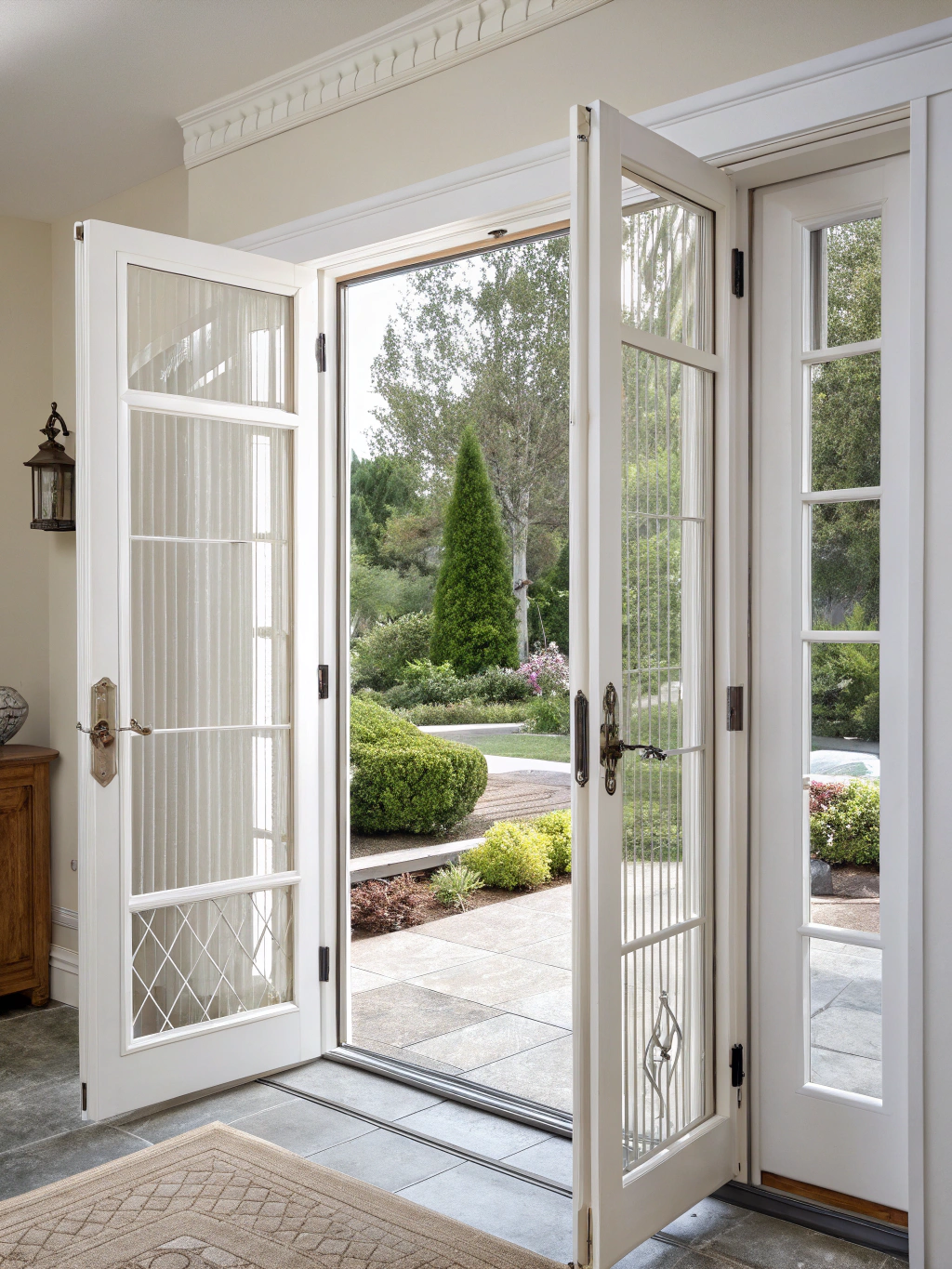
French doors can have screens on the exterior of inswing doors or the interior of outswing doors. Unlike a single hinged screen, a double-door system can preserve the full opening of exterior French doors when both leaves are open.
Best Options at a Glance
- Lowest cost: Wide magnetic mesh curtain.
- Cleanest stored appearance: Double retractable screen.
- Best rigid pet-flap support: Paired hinged screens.
- Best for custom widths: Pleated, sliding, or dealer-installed retractable system.
- Best for forced-entry resistance: Engineered security-screen assembly.
One Leaf or Both
Choose a single screen if the household uses only the active leaf. Choose a double-door screen when both leaves must open for furniture, parties, mobility access, or a clear patio passage; otherwise, a fixed center member may become an irritating shoulder-level obstacle.
Check French Door Screen Compatibility
A compatible screen for French doors must clear the door swing, handles, hinges, locks, flush bolts, threshold, and center joint. Inspect these parts before comparing advertised screen sizes.
Active and Passive Leaves
The active leaf carries the everyday latch and opens first. The passive leaf often stays secured by top and bottom flush bolts, so a reversible magnetic opening or retractable handle should align with the active side rather than forcing users into solid mesh.
Mullion vs Astragal
A fixed mullion remains between the doors and can support two independent screens. An astragal attaches to one leaf and moves with it, leaving a clear center opening that suits center-meeting retractable panels; the terms describe different parts and shouldn’t be used interchangeably.
Inswing vs Outswing
Inswing doors commonly take an exterior screen, while outswing doors usually need an interior screen or a frame built beyond the swing arc. Open each leaf fully and watch the handle path; a projecting lever can scrape a cassette before the door itself touches it.
Mounting Space and Hardware
Measure the flat jamb or trim area available for cassettes, tracks, hinges, or adhesive. A shallow recess may need an exterior door frame kit or custom build-out, but added framing must leave drainage paths and weather seals open.
Opening vs Door Size
Two nominal 36-by-80-inch slabs don’t prove that a 72-by-80 screen will fit. Product labels may describe maximum coverage, frame size, or an adjustable range, while the finished mounting opening can be smaller because of jambs, trim, thresholds, and cassette housings; compare it with standard French door dimensions.
Compare Screen Types and Costs
Magnetic curtains offer the cheapest temporary solution, while retractable screens give a cleaner opening when stored. Rigid, custom, and security systems cost more because their frames, tracks, locks, finishes, and installation carry much of the expense.
Double Retractable Screens
Two retractable mesh panels pull from side cassettes and meet near the center. They preserve decorative glass and disappear from view, but grit feels raspy beneath the handles when tracks get dirty, and wind can pull ordinary mesh from shallow guides.
Magnetic Mesh Screens
A magnetic curtain closes behind people and pets without a handle. It suits renters and seasonal use, yet hot trim, chalky paint, moisture, wind, and repeated dog contact can release the hook-and-loop attachment before the mesh itself fails.
Paired Hinged Screens
Paired rigid screens provide a traditional appearance, mechanical latches, and support for heavier mesh or some pet flaps. A hinged screen door needs swing clearance, balanced hinge placement, and accurate center alignment; slight frame sag can make the pair rub or leave an insect gap.
Pleated and Sliding Screens
Pleated mesh folds into a compact stack, while rigid sliding panels run along tracks and need stacking space. These systems suit unusually wide openings and restricted swing areas, though the bottom track needs frequent cleaning and pleated mesh remains partly visible when stored.
Security Screen Systems
A real security screen door combines reinforced metal mesh, an engineered frame, secure hinges, mechanical locks, and structural fasteners. Stainless mesh placed in a weak frame is still an insect screen, not a forced-entry barrier.
DIY vs Custom Systems
DIY magnetic and adjustable retractable kits work best in square, standard-size openings with flat trim. Choose custom screen doors for arched heads, wide openings, uneven masonry, unusual finishes, exposed wind, or frames needing build-outs; custom work also makes replacement parts more model-dependent.
Cost Comparison Table
These planning ranges include broad product and installation variations rather than firm quotes. Width, custom color, trim repair, travel, low-profile tracks, pet mesh, and locking hardware can shift the final total.
| Screen type | Typical budget range | Full opening | Pet use | Installation |
|---|---|---|---|---|
| Magnetic mesh | $25–$100 | Usually | Hands-free passage | Easy DIY |
| Double retractable kit | $300–$900 | Yes | Limited unless pet-rated | Intermediate |
| Custom retractable | $800–$2,500+ installed | Yes | Model-dependent | Professional |
| Paired hinged screens | $400–$1,500+ | Yes when opened | Good with reinforcement | Intermediate or professional |
| Pleated or sliding | $700–$2,500+ | Model-dependent | Model-dependent | Usually professional |
| Security screens | $1,500–$5,000+ | Model-dependent | Strong containment if engineered | Professional |
Measure French Doors for Screens

Measure the surface where the screen will mount, not the glass or nominal door slabs. Record width and height in three places, compare both diagonals, and inspect hardware and threshold clearances before ordering.
Identify the Mounting Surface
Determine whether the product uses an inside jamb mount, exterior surface mount, interior frame, or added build-out. The chosen surface must be flat and continuous, with enough width for fasteners, adhesive, tracks, and cassette housings.
Measure the Width
Measure across the top, middle, and bottom with a rigid tape. The smallest figure often controls an inside mount, but the product manual takes priority because some kits list the opening range while others list the assembled frame’s outside dimensions.
Measure the Height
Measure the left, center, and right from the intended head track to the sill or threshold. Check whether the sill slopes, and never cut a spring-loaded cassette without written manufacturer permission; uncontrolled spring tension can cause injury and ruin the unit.
Check for Square
Measure corner to corner in both directions. Matching diagonals indicate a square rectangle; a difference can make retractable panels meet at the top yet expose a wedge-shaped gap below, so correct the trim or install an approved square build-out frame.
Check Operating Clearances
Open both leaves fully and inspect handles, hinges, closers, flush bolts, shutters, and lock projections. For trip-hazard context, the 2010 ADA Standards limit many doorway thresholds to ½ inch and require beveling above ¼ inch, though private homes aren’t automatically covered.
Evaluate Tracks and Thresholds
A raised rail can catch a shoe, stroller wheel, walker, or robotic vacuum. Pick a low-profile track where access matters, and never bridge threshold weep holes or drainage channels without an approved detail that keeps water moving outside.
Screen Door Products by Installation Need
Select products only after matching their stated fit range to the measured mounting opening. A familiar size printed in a title doesn’t account for an out-of-square jamb, raised sill, shallow trim, or projecting hardware.
Retractable French Door Screens

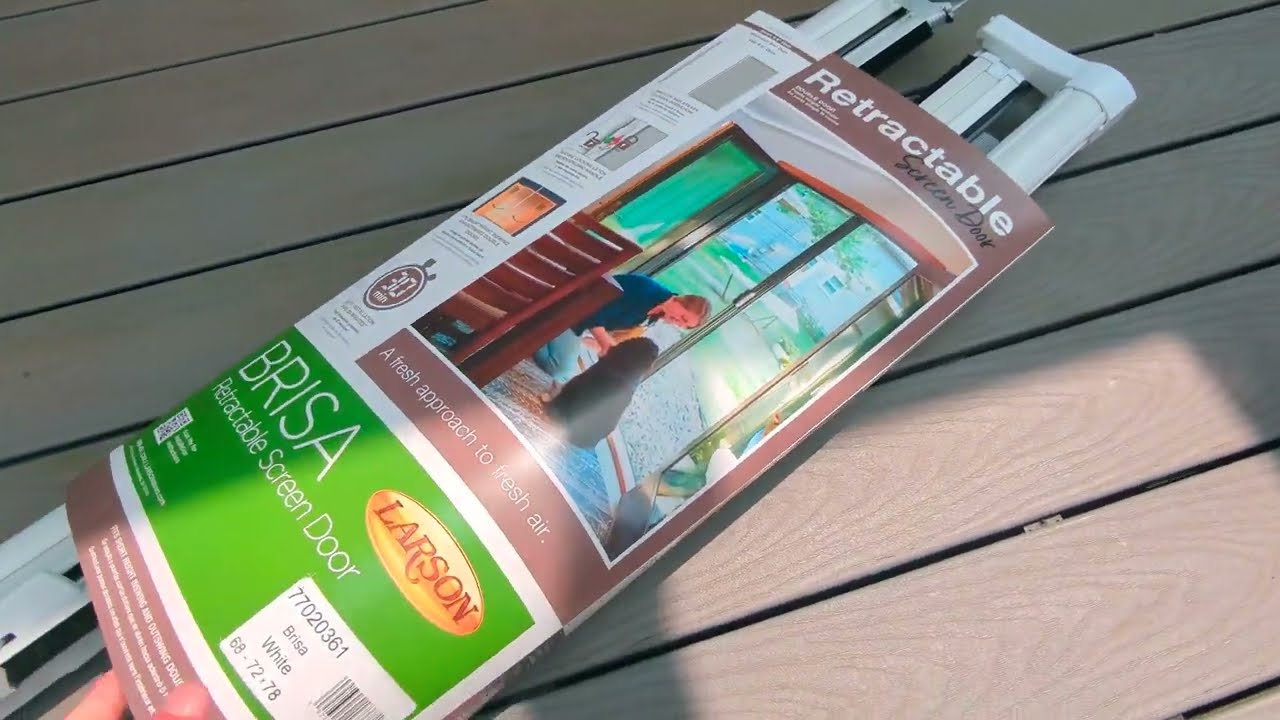
LARSON Brisa EZ-Glide French Screen
- Retractable double screen for French doors
- EZ-Glide operation offers smooth opening
- Black finish complements modern door frames
- Fits door widths from 68 to 72 inches
- Screens insects without blocking the doorway
 Buy on Amazon
The black LARSON Brisa option covers stated widths from 68 to 72 inches and gives dark trim a coordinated appearance. Confirm the finished opening height, handle clearance, sill shape, and required mounting depth before purchase.

LARSON Brisa Sandstone French Screen
- Retractable double screen for French patio doors
- EZ-Glide system supports smooth daily use
- Sandstone finish pairs with warm-toned trim
- Fits door widths from 68 to 72 inches
- Retracts neatly when a screen is not needed
Buy on Amazon
The sandstone version suits beige, tan, and warm-neutral frames while using the same stated 68-to-72-inch width range. Frame color is cosmetic; fit remains decisive, particularly where brick molding or an uneven sill narrows the installation area.
Wide Magnetic Screens

Fenestrelle Magnetic French Door Screen
- Made for French and sliding doors
- Magnetic center seam closes behind you
- Lets fresh air circulate while blocking insects
- Hands-free entry for kids and pets
- Fits 72 by 80 inch openings
Buy on Amazon
This Fenestrelle screen targets 72-by-80-inch openings and provides hands-free passage. Test whether its center seam falls within the everyday walking path, then clean and dry the trim before attaching the adhesive strip.
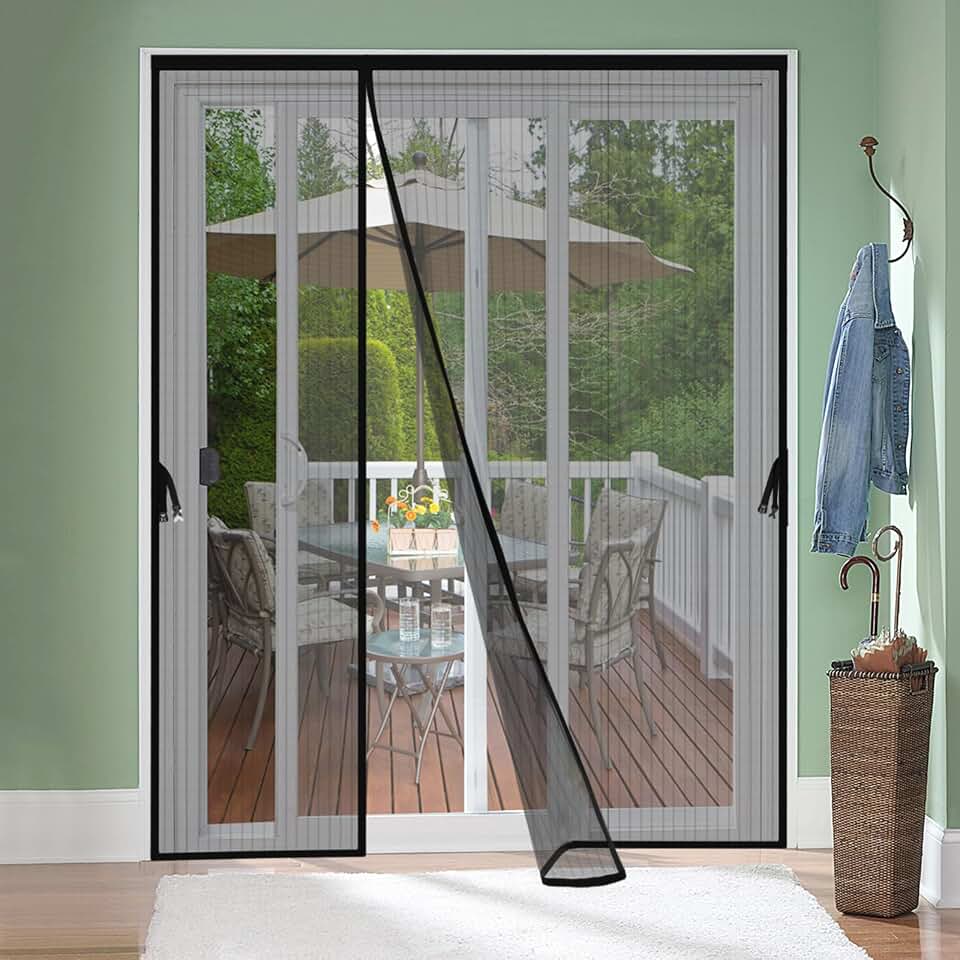
Wide Reversible Magnetic Door Screen
- Sized for 60 by 80 inch French doors
- Reversible opening works on left or right sides
- Heavy-duty mesh suits patio and sliding doors
- Magnetic seam supports hands-free entry
- Provides airflow while keeping insects out
Buy on Amazon
The reversible model targets 60-by-80-inch openings and can place entry on the active side. Verify whether 60 by 80 describes the covered opening or overall fabric size, since extra fabric can bunch while too little creates perimeter gaps.
Pet-Resistant Magnetic Mesh

PET Mesh Magnetic French Door Screen
- Strong PET mesh resists everyday wear
- Magnetic closure supports hands-free access
- Pet-friendly design makes outdoor trips easier
- Helps block insects while allowing airflow
- Fits 72 by 80 inch French and patio doors
Buy on Amazon
PET mesh resists routine claw contact better than light fiberglass, but “pet-friendly” doesn’t mean chew-proof or escape-proof. A determined dog can separate the magnets or pull the attachment from the trim while the mesh remains intact.
Fiberglass Magnetic Mesh

Fiberglass Magnetic French Door Screen
- Durable fiberglass mesh for French door openings
- Magnetic panels close after each pass-through
- Helps keep flies and mosquitoes outside
- Double-door curtain gives a wide walk-through
- Fits openings up to 70 by 79 inches
Buy on Amazon
This magnetic screen lists maximum coverage of 70 by 79 inches. “Up to” doesn’t guarantee a neat fit on every smaller frame: excess fabric can drag, wrinkle, or pull the magnets out of line, so compare the opening with the maker’s attachment dimensions.
Choose Mesh, Pet, and Shutter Options
Choose mesh by insect size, airflow, visibility, pet contact, and exposure rather than strength claims alone. A French door with a dog door usually needs a rigid screen or modified door assembly, while shutters solve light and privacy needs rather than insect control.
Fiberglass and Fine Mesh
Standard fiberglass insect screen commonly uses an 18-by-16 weave, while 20-by-20 or finer mesh helps block tiny gnats and no-see-ums. Finer openings reduce some airflow and soften the outdoor view; Phifer fiberglass mesh illustrates how weave and wire dimensions vary by product.
PET and Polyester Mesh
Heavy PET or vinyl-coated polyester tolerates clawing and repeated body contact better than standard fiberglass. It feels coarser under a fingertip and looks darker across the opening, while seams, spline channels, magnets, and adhesive remain potential weak connection points.
Metal and Solar Mesh
Aluminum holds its shape but keeps a permanent crease after a hard strike. Stainless steel offers high durability only when supported by a suitable frame, while solar mesh cuts glare and light at the cost of airflow; compare metal screen doors by the complete assembly, not mesh material alone.
Magnetic Pet Passage

A magnetic seam lets many dogs push through without permanent glass or slab changes. It offers no positive lock, can flutter open in a gust, and wears fastest near the lower magnets, so it works for supervised pet access rather than dependable containment.
Rigid Screen Pet Flaps
A rigid pet flap needs a framed panel with reinforcement around the cutout. Flexible retractable mesh can’t roll around a hard insert, so use a screen door with pet door and size the flap by shoulder width and torso height, not weight alone.
Door-Installed Pet Doors
A factory-made insulated-glass unit, solid lower panel, or replacement leaf can create a lockable pet entrance. Tempered glass can’t be cut after tempering, and field changes may affect warranties, weather sealing, and energy performance; compare a door with built-in dog door before altering existing glass.
Shutters vs Screens
French door shutters provide privacy, shade, and decoration, while screens admit air and help exclude insects. Shutter frames, tilt rods, handles, and hold-down clips may reduce space for an interior retractable cassette, so operate both systems during the clearance check.
Install and Maintain French Door Screens
Successful installation starts with a square frame, a dry fit, and an unobstructed door path. Maintenance centers on clean tracks, aligned closures, secure attachments, controlled wind exposure, and access to replacement parts.
Magnetic Screen Installation
Clean the trim with residue-free cleaner, let it dry, and position the top center before exposing all adhesive. Hang both sides without stretching, set the lower edge just above the sill, observe the maker’s curing period, and add approved tacks where textured or sun-heated trim weakens the adhesive bond.
Retractable Screen Installation
Dry-fit the cassettes and rails, mark manufacturer-approved cuts, and keep fasteners away from glass edges and hidden wiring. Adjust panel tension and center alignment before final tightening, then test both leaves, locks, and drainage paths; broader framing principles appear in this exterior door installation guide.
Hinged Screen Installation
Use corrosion-resistant fasteners compatible with the frame and distribute hinges to control sag. Fit a center latch or screen astragal made for paired doors, then adjust closers so the leaves meet gently without slamming, bouncing open, or creating a finger pinch point.
Common Fit Failures
Beginners often order by nominal slab size, ignore an out-of-square jamb, or place a magnetic seam opposite the active leaf. Another common mistake is drilling before checking the full outswing arc; dry-fit every part and mark both door paths with painter’s tape first.
Tracks, Wind, and Adhesive
Vacuum grit before it turns movement rough and scratchy, and retract flexible panels during severe wind when the manufacturer calls for it. At exposed patios, retained-edge mesh handles gusts better; on hot or chalky trim, permitted mechanical fasteners outlast adhesive-only attachment.
Pet and Security Limits
Pet-resistant mesh doesn’t guarantee pet containment, and ordinary insect mesh offers no reliable intrusion or fall protection. Use a mechanically latched rigid assembly for escape-prone animals and an engineered security door where forced-entry resistance matters; screens never replace direct child supervision.
Cleaning, Repairs, and Parts
Wash mesh with mild soap, water, and a soft brush rather than pressure washing or harsh solvents. Inspect spline, magnets, latches, cassette tension, lower pet-damaged corners, and corroded screws; before buying, confirm access to replacement cartridges, tracks, handles, and warranty service.
Practical Notes From Real-World Use
A screen can look correctly sized while hanging poorly because the head trim dips by only a few millimeters. Dry-fitting reveals this early: magnets click unevenly, one bottom corner brushes the sill, or a retractable handle grows heavier near the center; thin approved shims behind a build-out frame work better than forcing the screen out of alignment.
High-traffic doors expose small faults quickly. Keep the active passage wide, place handles where users naturally reach, photograph product labels before trim covers them, and store spare magnets or proprietary parts; these steps reduce downtime after a pet impact, damaged track, or worn center latch.
FAQs
Disclosure: LuxyDoor is reader-supported. When you buy through links on our site, we may earn an affiliate commission at no extra cost to you. As an Amazon Associate we earn from qualifying purchases.

Abdelbarie Elkhaddar
Glamorwood Ltd.
A door expert and home improvement writer with over 12 years of experience. I help homeowners and contractors choose smart, stylish, and secure doors.
Bifold Barn Door Buying Guide: Sizes, Clearance, Hardware, and Tips
A bifold barn door can add barn-style character while saving space in closets, pantries, laundry rooms, bathrooms, and tight hallways. This guide explains how they work, how to measure correctly, what hardware you need, and what to check before buying.Modern Barn Door Buying Guide: Styles, Hardware, Sizing and Costs
Choosing a modern barn door means balancing style, privacy, hardware, sizing and installation needs. This guide compares materials, room fit, costs and product options so you can choose the right modern sliding barn door for your space.




Leave a Reply